

If you want to know how to stop condensation on windows, start with the air in the house.
Window condensation happens when warm air hits cold glass. A little on a bitter morning can be normal. Soaked sills are a warning sign.
The Fast Answer: Stop Condensation by Controlling Moisture and Airflow
To stop condensation, reduce indoor moisture, improve ventilation, keep air moving near the glass, and wipe water before it sits on painted wood, drywall, or trim.
That is the first solution. Not new windows. Not a panic call.
Run exhaust fans, open coverings, keep bedroom doors cracked, stop drying clothes indoors, and use a dehumidifier in damp rooms. If condensation keeps coming back, look harder at the windows.
Why Window Condensation Forms When Warm Air Hits Cold Glass
Condensation forms when warm air indoors meets a cold surface and can no longer hold its moisture. The water has to go somewhere, so it condenses on the glass.
You see it on windows because glass gets cold fast. In winter, outdoor air pulls heat from the glass panes, and the room-side surface becomes the easiest place for dew to show up.
Warm Air, Cold Air, and the Dew Point
Warm air holds more moisture than cold air. Air from a shower, cooking, laundry, or a closed bedroom can feel normal and still turn into water when it touches cold glass.
That point where moist air turns into visible water is the dew point. ENERGY STAR explains that interior condensation forms when the window surface drops below the dew point of humid indoor air, which is why cold window glass often shows the problem before walls or furniture do.
Why Winter Makes the Glass Colder
Older windows, single-pane glass, worn weatherstripping, and poorly performing panes lose heat faster. Heavy coverings or a drafty bay window can also trap cool air against the glass.
The colder the glass, the faster condensation forms. That cooling does not automatically mean the windows are bad.
Check Where the Condensation Is: Inside, Outside, or Between the Panes
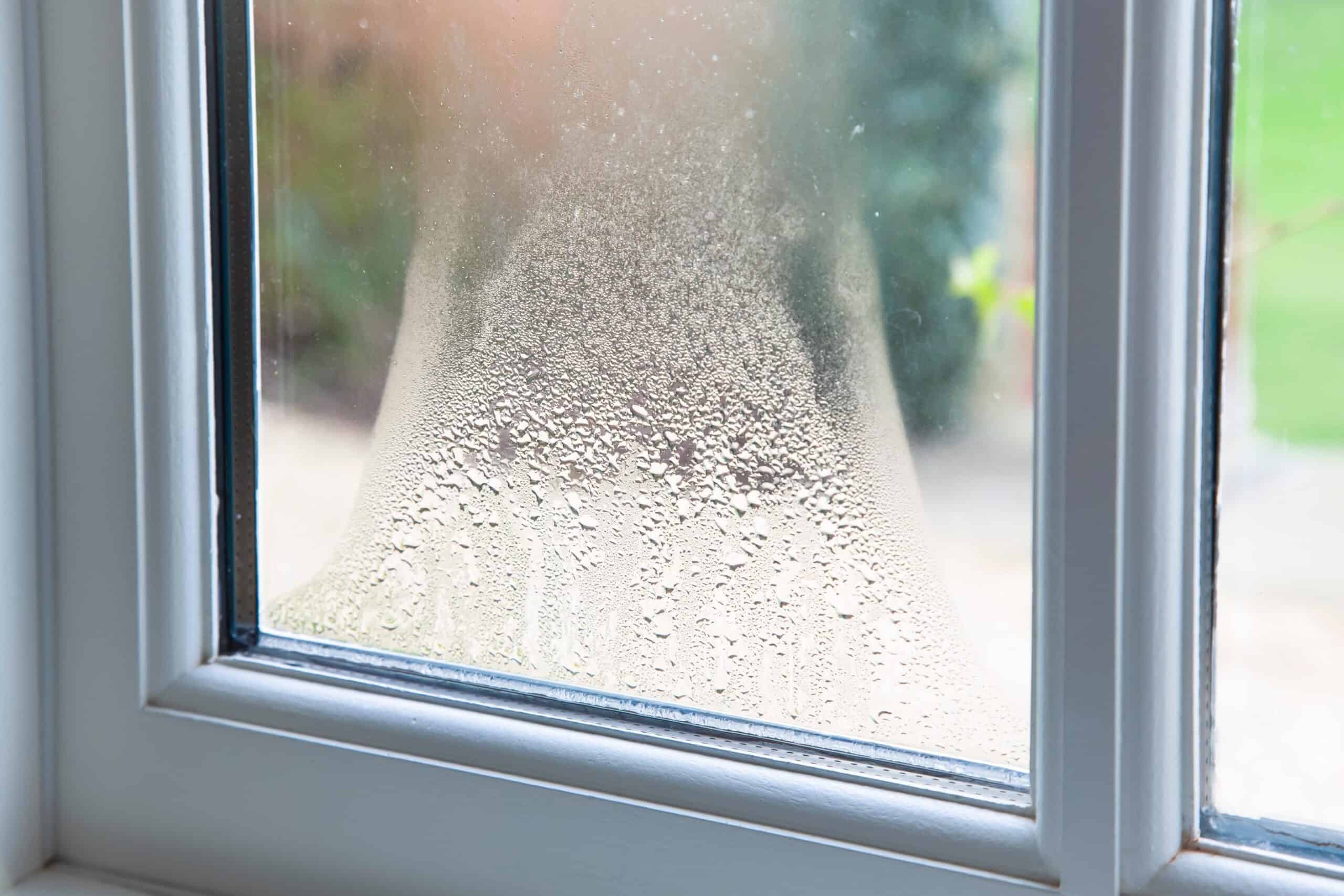
Do this check before blaming humidity or pricing windows. If one window stays foggy after cleaning, that is a different problem.
Inside Condensation Usually Starts With Indoor Humidity
Inside condensation usually points to indoor humidity, weak ventilation, or poor air circulation near the glass. If you can wipe the moisture off from inside the room, start with house conditions.
Bathrooms, bedrooms, kitchens, laundry rooms, and tightly closed spaces often create the problem. The windows are where moisture shows itself. If the water is on the room side, this inside condensation guide can help you separate normal winter moisture from signs that airflow, humidity, or window performance needs attention.
Outside condensation is usually not the issue. It can happen with the right climate and moisture combination, and it does not mean failure.
Between-Pane Condensation Usually Points to a Failed Seal
Condensation between window panes is different. If fog, drip, or haze sits inside the glass unit where you cannot wipe it away, the seal may have failed.
That means moisture has entered the insulated glass unit. Surface fixes will not remove it. A dehumidifier will not dry the space between panes. Cracking or cloudy glass inside the unit should be inspected.
This is where replacing glass or the full unit may make sense. When the moisture is trapped inside the unit, a foggy window diagnosis is more useful than another round of wiping, because the problem is likely in the seal or glass assembly.
Control Moisture Before It Reaches the Glass
Homeowners often skip this part because it feels less satisfying than buying something. It is also where the biggest gains usually are.
Lower humidity levels reduce the amount of moisture available to turn into condensation. The goal is not making the house painfully dry. Winter comfort and glass temperature both matter. When indoor air feels heavy, the glass is telling you the room needs less moisture or more movement.
A house may be comfortable at one humidity level in mild weather and too wet at the same level during a hard cold snap. If the windows are dripping, the indoor humidity is too high for the glass temperature you have.
Common Moisture Sources in Different Types of Rooms
Showers dump moisture into the bathroom. Cooking sends steam into the air. Laundry adds moisture, especially when drying clothes indoors. Clothes dryers that do not vent outdoors correctly can load a room with damp air.
Bedrooms are sneaky. Close the doors, shut the blinds, run the heat all night, and put two people in the room breathing for eight hours. By morning, the glass can be wet.
Plants, damp storage, and tightly sealed rooms add to the load. In combination, they create excess moisture.
Run the bathroom fan during and after a shower. Use kitchen ventilation while cooking. Keep laundry areas dry. Do not block vents with furniture or storage.
When a Dehumidifier or Moisture Absorbers Help
A dehumidifier helps when moisture is concentrated in a room or area. A damp basement, laundry room, or bedroom with repeat morning condensation is a fair place to use one.
A dehumidifier is not a magic fix for bad airflow or failed glass. It removes moisture from the air, but it cannot repair a seal or warm a cold pane.
Moisture absorbers have a smaller role. A container-style moisture absorber can help in a closet, small space, or window ledge area, but moisture absorbers are not whole-house humidity control.
Use these tools where they fit. The EPA warns that condensation or moisture on windows, walls, or pipes should be dried quickly and traced back to the moisture source, because moisture control is what keeps mold and mildew from returning.
Use Exhaust Fans, Fresh Air, and Open Coverings
Still air is bad around cold glass. It lets moisture sit there, cool down, and collect. Moving air helps dissipate moisture before it turns into water, especially in bedrooms with closed doors.
Open blinds or curtains during the day so warm air can reach the glass. Keep interior doors cracked so air can move from room to room. Use exhaust fans in bathrooms and kitchens. Run a ceiling fan or small fan in problem rooms. Briefly ventilate with fresh air when the house feels stale or damp.
Trickle vents can help in tighter homes because they allow a small amount of fresh air to enter without opening the window wide. They are not a cure-all, but they can help prevent condensation when the window unit is otherwise sound and the room is managed.
Quick Ways to Reduce Condensation Overnight and in the Morning

Overnight condensation is usually a bedroom problem first. The room closes off, moisture builds, coverings trap cold air, and the glass loses the fight.
To stop condensation on windows overnight, set the room up before bed.
Overnight Fixes Before Water Drips Onto the Sill
Crack the bedroom door. Open blinds slightly if privacy allows. Run a fan on low near the windows. Avoid drying clothes in the room. Use a dehumidifier if the room is damp.
Do not shut everything tight unless you like wet glass in the morning.
Moisture absorbers for windows can help with small, localized trouble spots. They are usually the wrong tool for too much condensation across several windows.
Wipe the glass first. Then wipe the lower corners, sash, and sill. If water is pooling, dry it completely. A window vacuum can help when there is enough water to make towels annoying.
Watch the same spots for repeat moisture. Peeling paint, soft wood, dark staining, mildew smell, or window condensation mold around the sill means it has lasted too long.
When Old Windows, Failed Seals, or Poor Efficiency Are Part of the Problem
Does condensation mean I need new windows? Not by itself.
Inside condensation alone usually means the indoor air is carrying more moisture than the cold glass can handle. Replacing windows first is usually the wrong call.
Does Condensation Mean You Need New Windows?
Look closer when you also have drafts, damaged frames, cracked glass, bad locks, soft sills, recurring between-pane fog, or fast heat loss.
That is no longer just a humidity conversation. That is window performance.
Failed seals can let moisture into the panes. Poor construction or a bad install can leave gaps. Inefficient units can make the room-side glass colder than it should be.
Yes. New energy efficient windows can still have room-side condensation if indoor humidity is too high.
Better windows usually keep the interior glass warmer, which can reduce condensation, but they do not delete moisture from the house.
Prevent Condensation From Coming Back This Winter
Preventing window condensation is a routine, not a one-time trick.
Winter Condensation Prevention Checklist
Use this checklist when condensation keeps coming back: monitor humidity levels, run exhaust fans during showers and cooking, improve air circulation around problem windows, keep interior doors open, avoid drying clothes indoors, use a dehumidifier in damp rooms, use moisture absorbers only for small spaces, wipe water in the morning, and inspect fog between panes.
Most homes need a combination of humidity control, ventilation, and better-performing windows only when the windows are part of the failure.
For broader symptoms like drafts, soft sills, stubborn leaks, or frame damage, this window problems checklist can help you decide whether the next step is repair, sealing, or replacement. If the glass is wet on the room side, fix the moisture and airflow first. If the fog is between panes or the frame is failing, get the window inspected.